Housingkind
A digital visualization platform that helps communities understand how missing middle housing can fit into their neighborhoods.
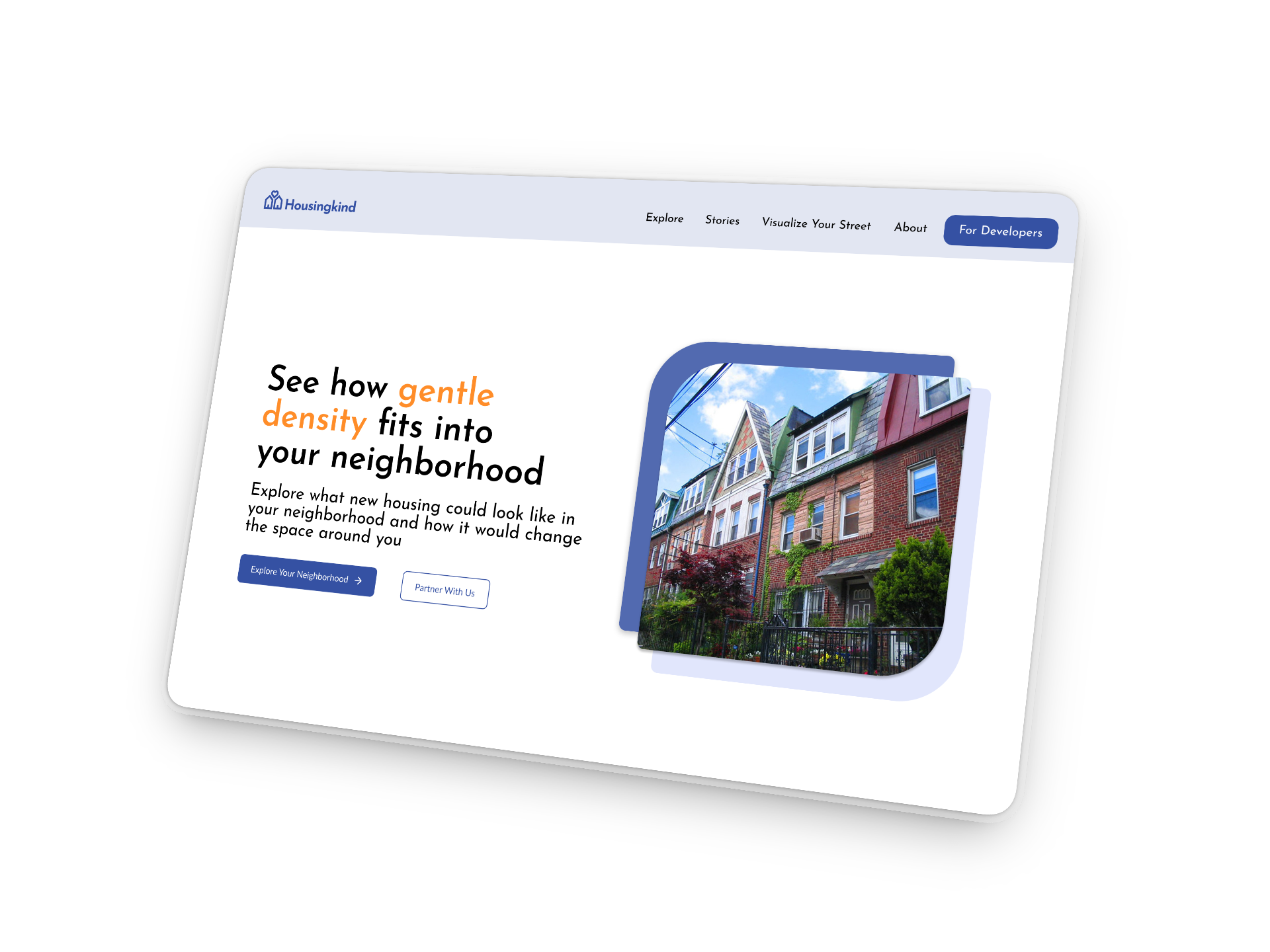
Challenge: Many communities support affordability and walkability but resist the housing needed to achieve them. Developers need better ways to communicate the value of Missing Middle housing.
Solution: Housingkind is a digital visualization platform designed to help communities visualize how missing middle and mixed-use housing could integrate into their real neighborhoods.
Deliverables: Research & Strategy, UX Research, Systems Thinking, Design Strategy, Operations Management, Product Design, Cross-functional Collaboration, Figma Make, Artificial Intelligence
Team:
Samantha Popek, Lucy Murdock, Jaden Radcliff, Obid Ochilov
Org:
In partnership with ViaCDC, AARP and Startingblock
Timeline:
Aug 2025 - Present
Role:
UX Design & Research
Overview
This project began in my Advanced Design Thinking for Transformation course as part of my master’s program, where our year-long project focused on exploring challenges and opportunities within the housing crisis.
Through the teams research, we noticed a recurring pattern: many people admire vibrant, walkable neighborhoods with a mix of housing types, yet feel hesitant when similar developments are proposed in their own communities. This highlighted an important gap—housing conversations often happen in abstract terms, making it difficult for residents to clearly picture how new housing could realistically fit into the places they already know and care about.
This project began with a design challenge:
How might we design housing solutions that create greater access while supporting dignity and belonging across Wisconsin?
— MD+I Design Horizon
Research Methods
Stakeholder Interviews: Spoke with developers, city council members, housing advocates, and residents to understand different perspectives within the housing system.
Secondary Research: Reviewed housing policies, planning documents, and existing research on gentle density and Missing Middle housing.
Comparative Analysis: Examined existing housing tools, visualization platforms, and community engagement methods to identify gaps and opportunities.
Systems Mapping: Analyzed how policy, community perception, and development processes interact within the housing ecosystem.
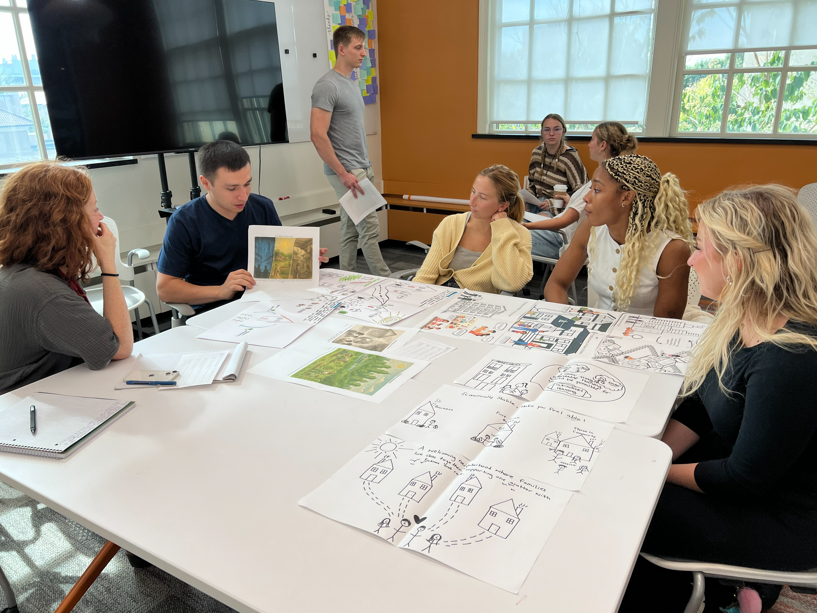
Sharing early creative ideas and exploring different concepts during the ideation phase.
Field Research & Stakeholder Engagement
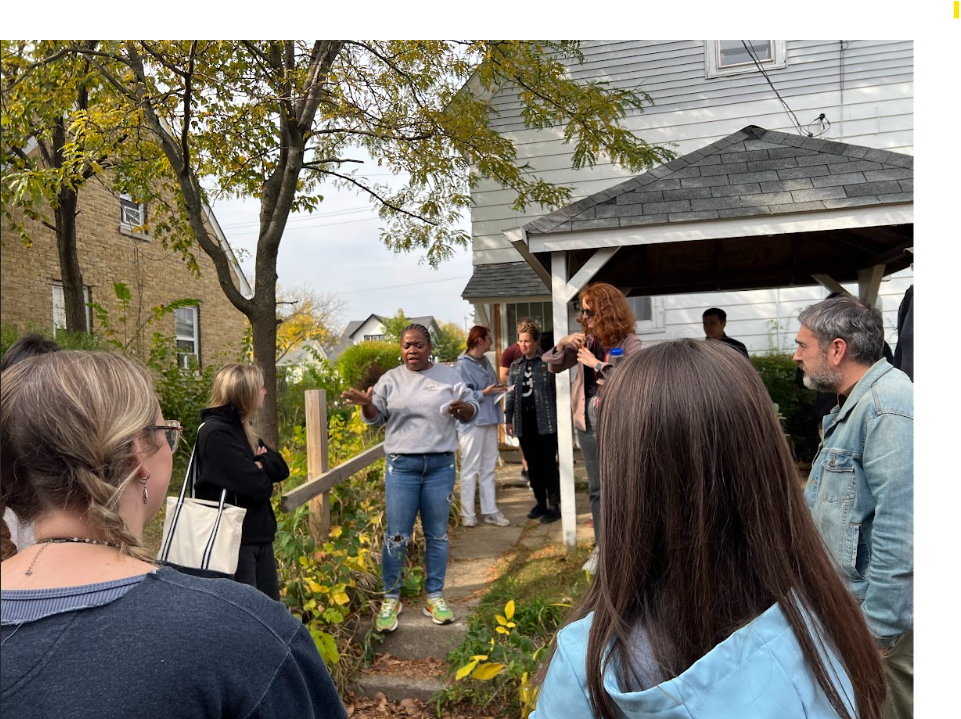
Got a tour of the CR8TV House and saw the space in action.
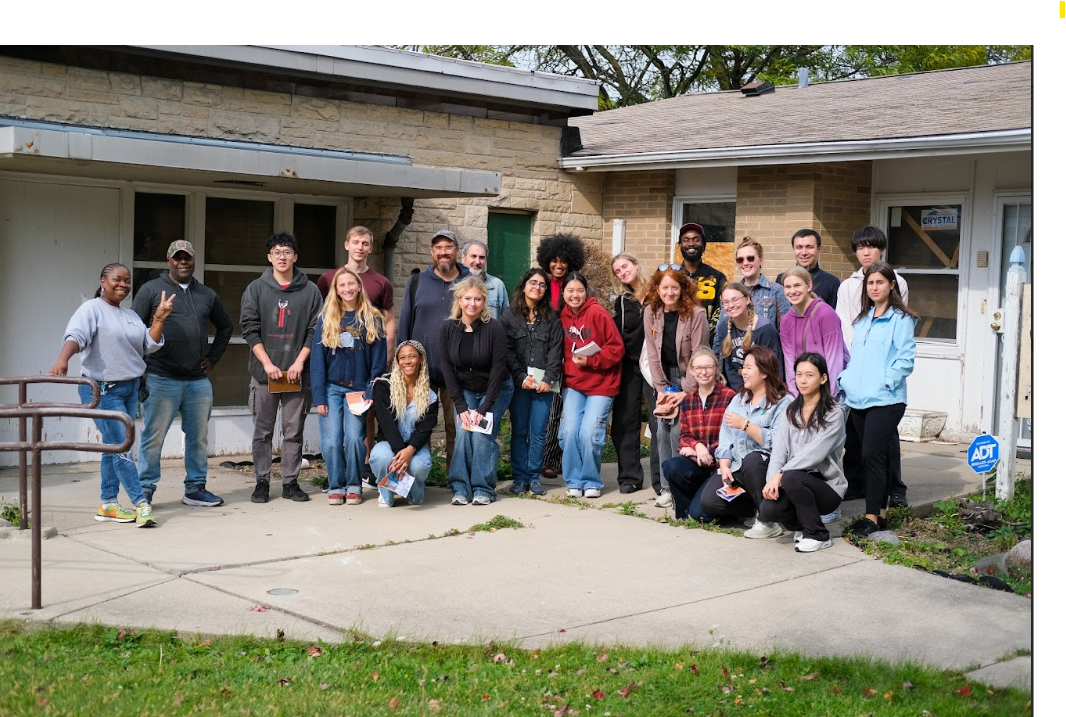
Program group photo after touring an abandoned church being transformed into a community coffee shop.
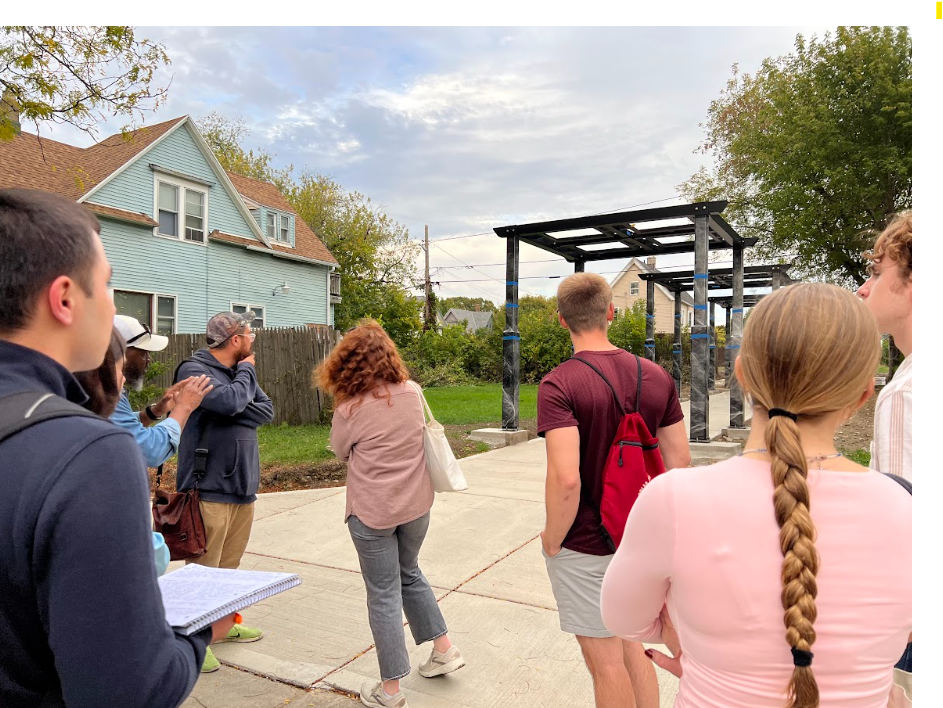
Visited VIA CDC and connected with the community they support.
We prioritized real-world engagement to better understand the housing crisis beyond desk research. As part of the program, we traveled to Milwaukee to meet with organizations working directly in this space.
We spoke with VIA CDC, a key partner in our project, to learn about affordable housing development and community challenges. We also visited the CR8TV House, where we saw how housing and community-building come together in practice.
These experiences helped ground our work in real perspectives, shaping our design decisions and ensuring our solutions were rooted in actual needs.
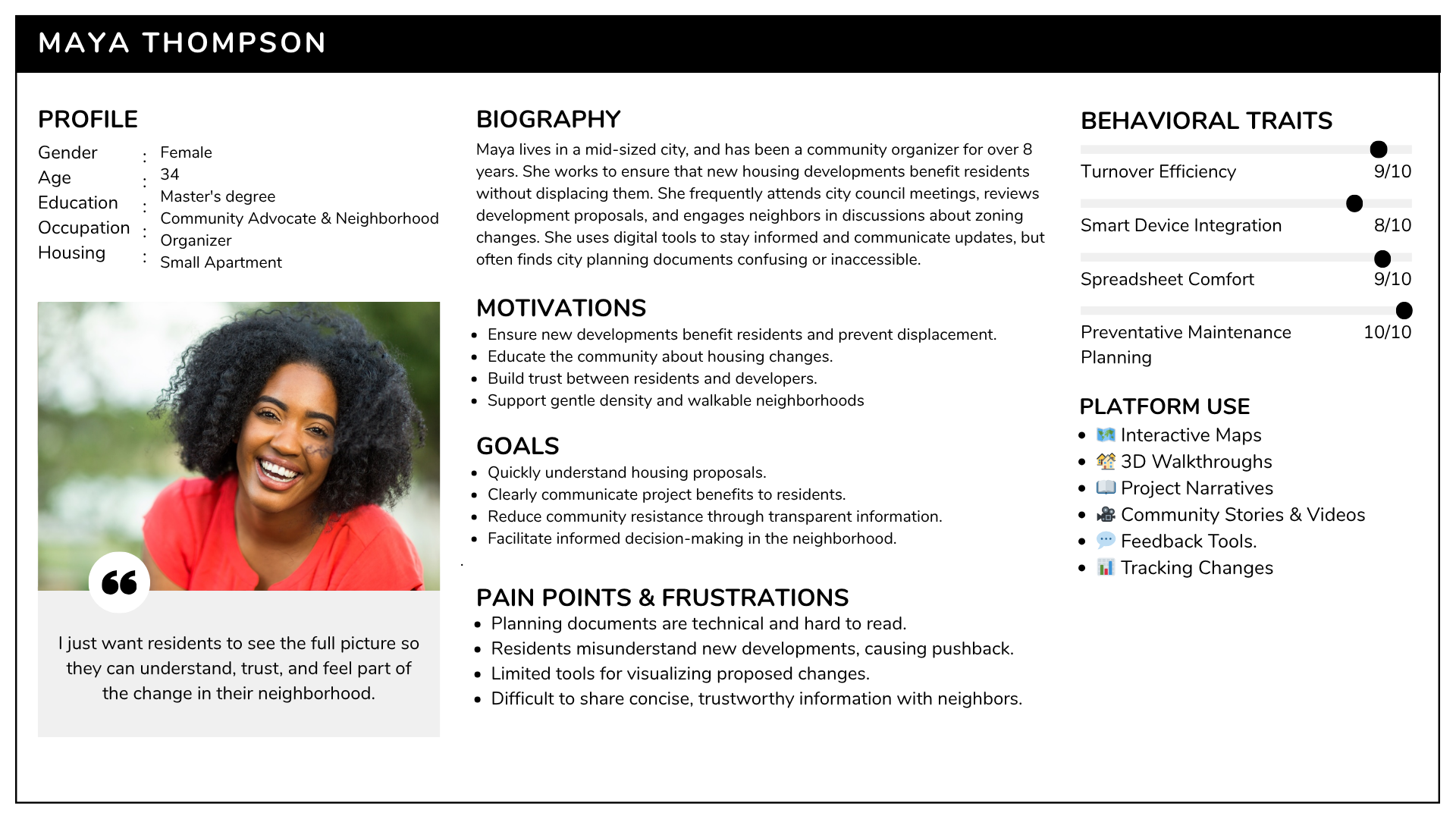
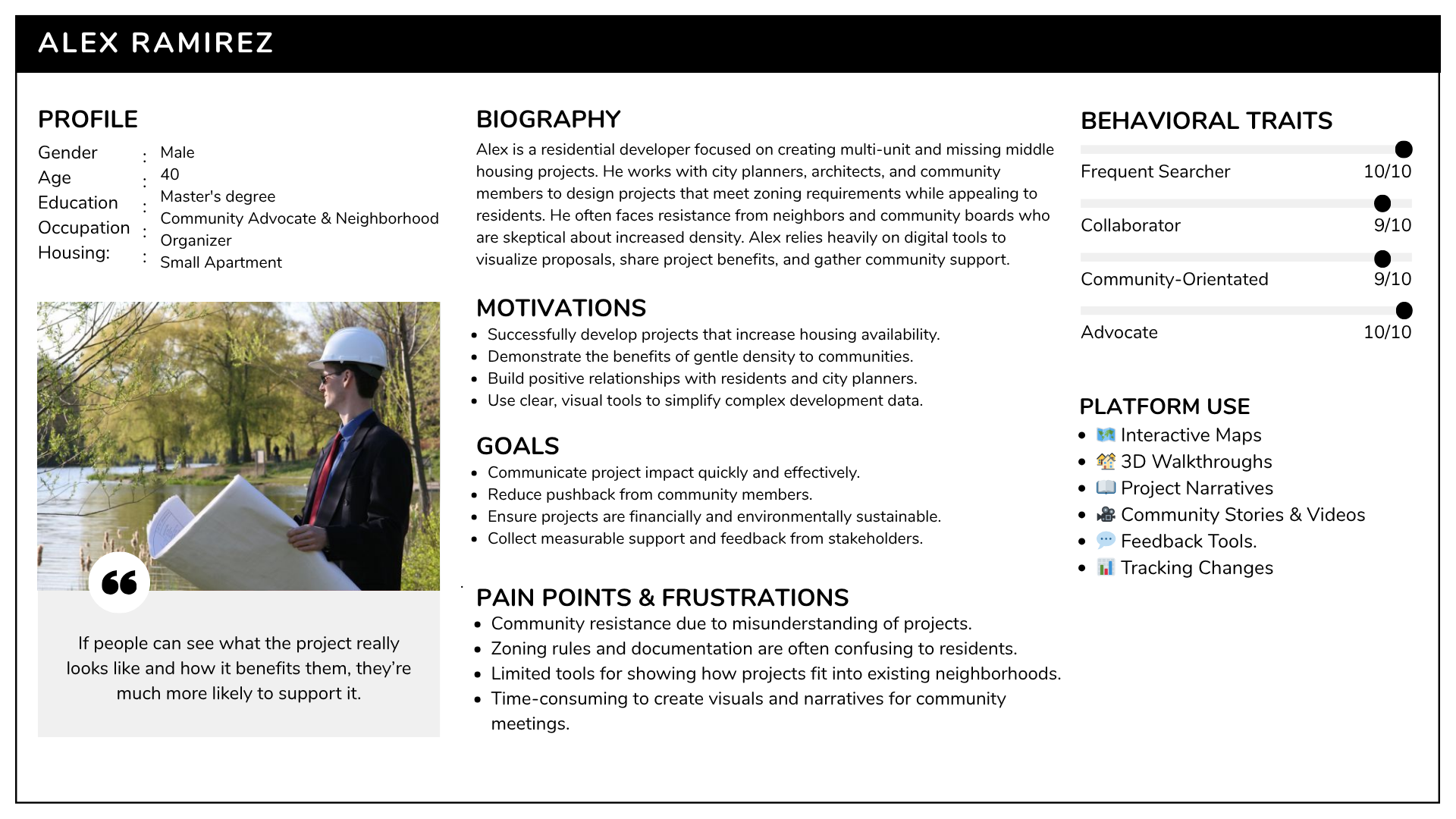
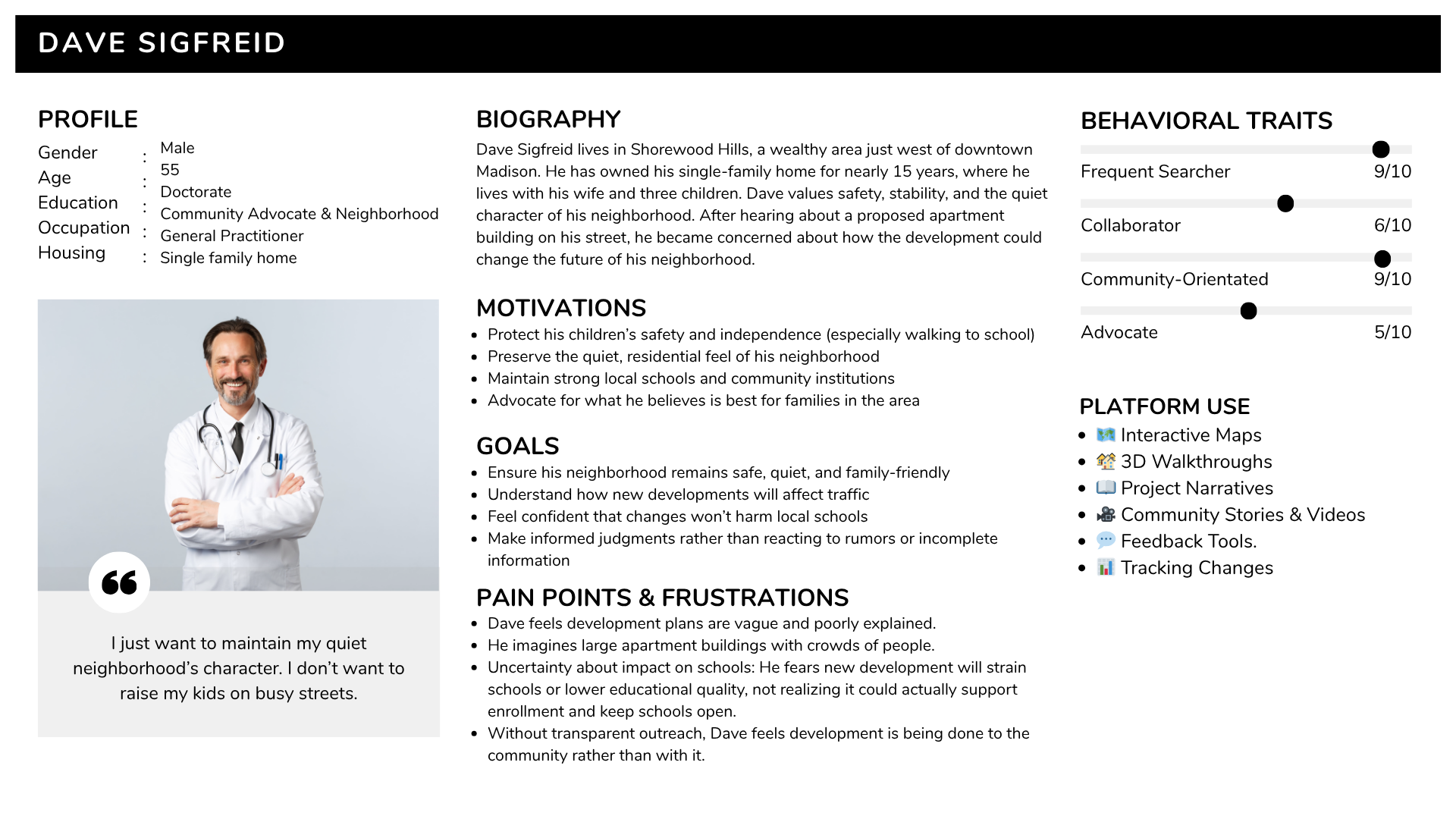
User Personas
The user personas for Housingkind were created based on research and stakeholder insights to represent the different types of people impacted by housing development, including residents, community members, and advocates. These personas highlight key goals, concerns, and perceptions around “missing middle” housing, helping uncover common fears and misunderstandings. By using these personas, our team was able to design solutions that are more empathetic, relatable, and focused on shifting perception through clearer, more accessible information.
SYSTEM MAPPING
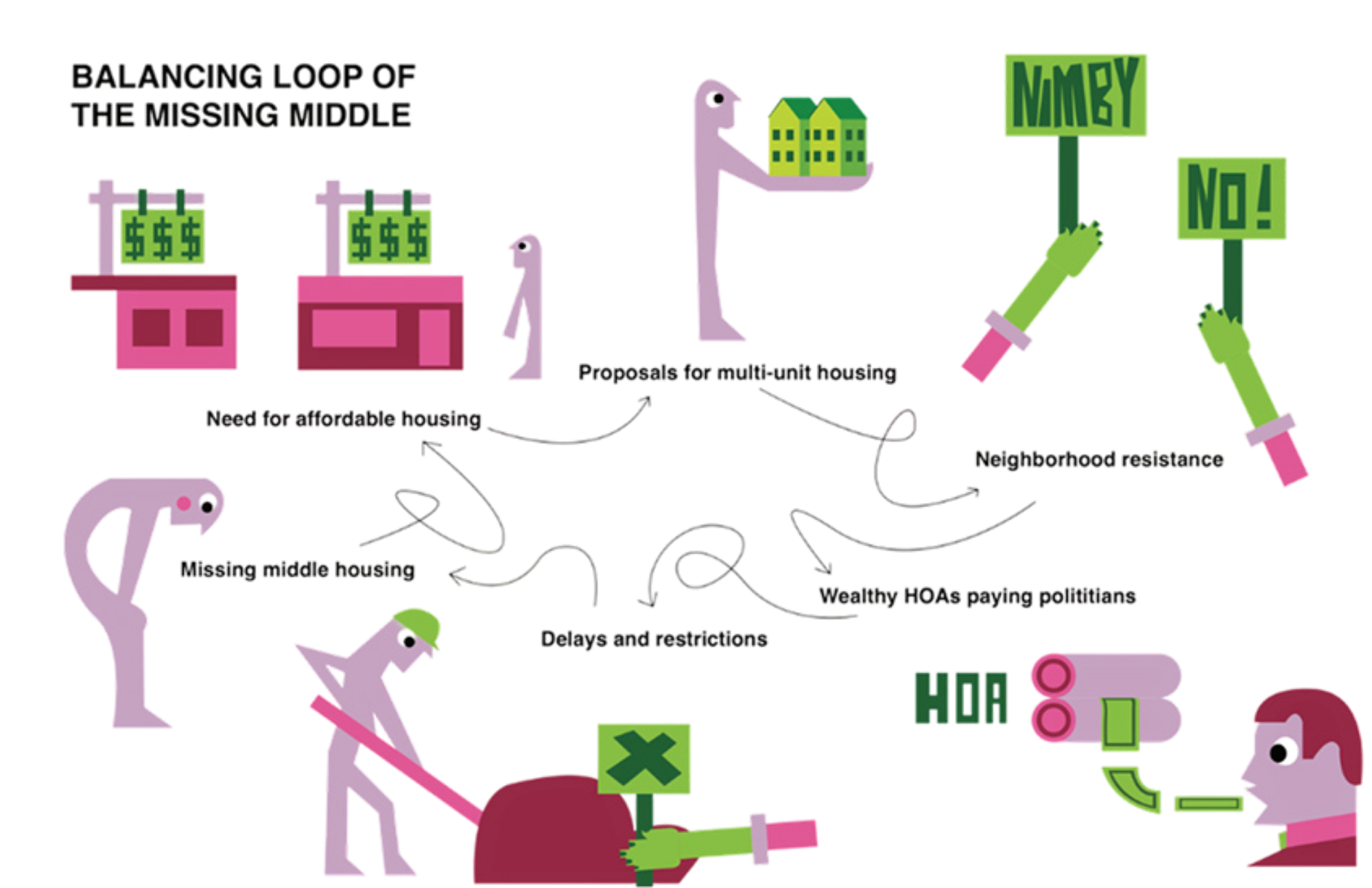
This map represents the housing ecosystem to better understand the relationships between stakeholders, including developers, policymakers, and community members. This helped us identify key tensions, gaps in communication, and opportunities where design could create meaningful impact.
Key Insights & Takeaways
“People fear what they cannot see.”
Housing resistance is often driven by perception, not just policy or cost
People struggle to visualize how new housing fits into their existing neighborhoods
There is a gap between what people say they want (walkability, density) and what they support locally
Trust and communication play a major role in housing acceptance
Real examples and lived experiences are more impactful than abstract explanations
Where Design Can Intervene
Help communities visualize how missing middle housing fits into their neighborhoods
Make housing concepts and policies more clear and accessible
Create interactive tools to explore different development scenarios
Use immersive experiences to build understanding and reduce resistance
Support developers with better communication tools
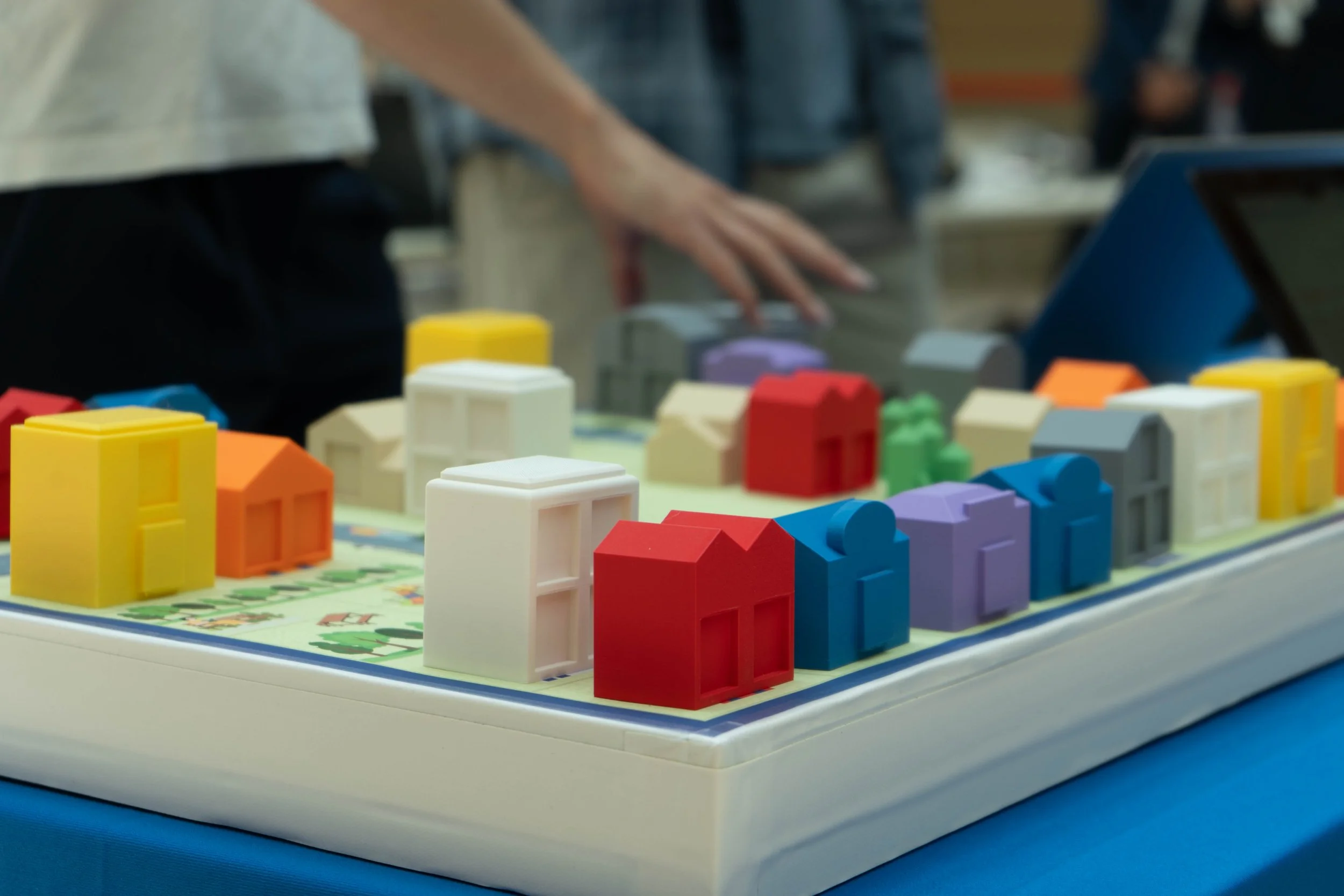
3D model of our boardgame to show how gentle density looks like in neighborhoods.
Branding Concept
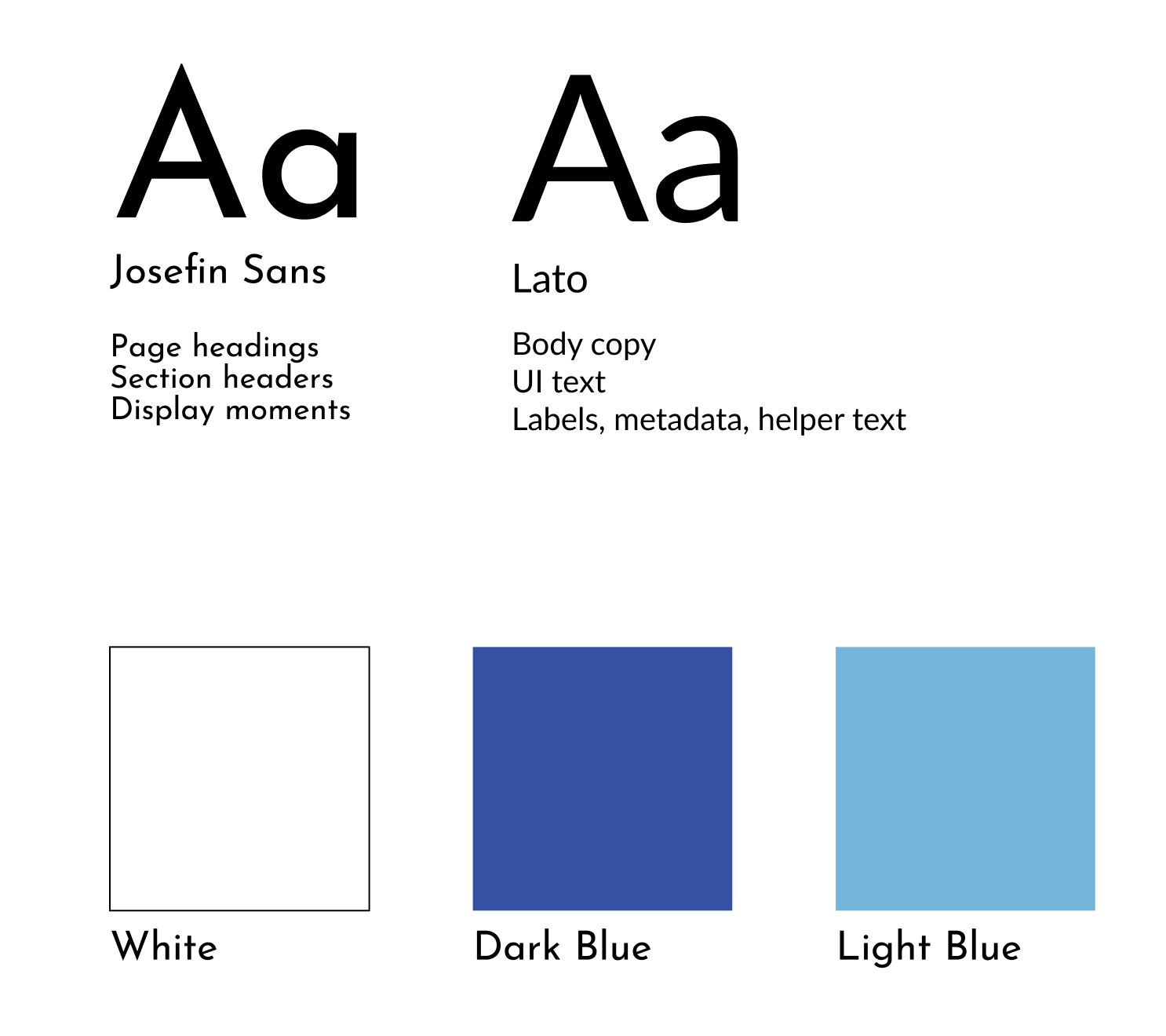
The Housingkind brand uses a simple mark of two houses with a heart above them to represent community, trust, and a more human approach to housing. The two homes reflect different people coming together, while the heart emphasizes care and connection. A palette of layered blue tones was chosen to convey trust, clarity, and reliability, and the clean, modern typography keeps the brand approachable and easy to understand. Together, these elements create a calm, human-centered identity that makes housing feel more accessible and less intimidating.
AI-Assisted Design Exploration
Goal: Generate and evaluate multiple concepts quickly.
What I used AI for:
Exploring layout variations
Testing visualization approaches
Rapid prototyping of housing comparison experiences
Generating interaction concepts for user feedback sessions
What I did:
Defined product requirements
Wrote prompts and directed the outputs
Evaluated concepts against user research
Selected, modified, and refined solutions
Created final UX flows and design decisions

Before (Figma Make)
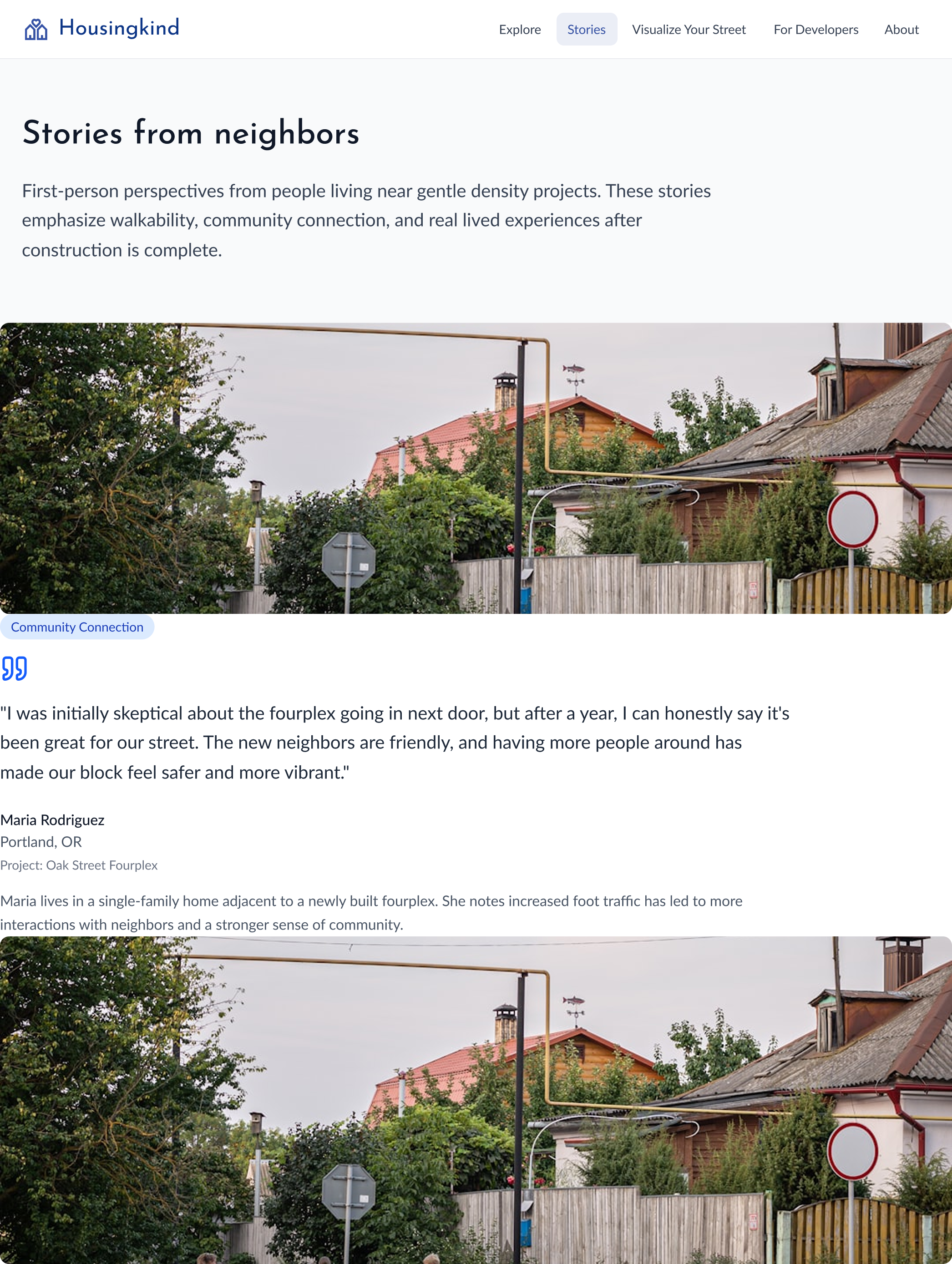
Initial AI-generated concept used for rapid exploration.
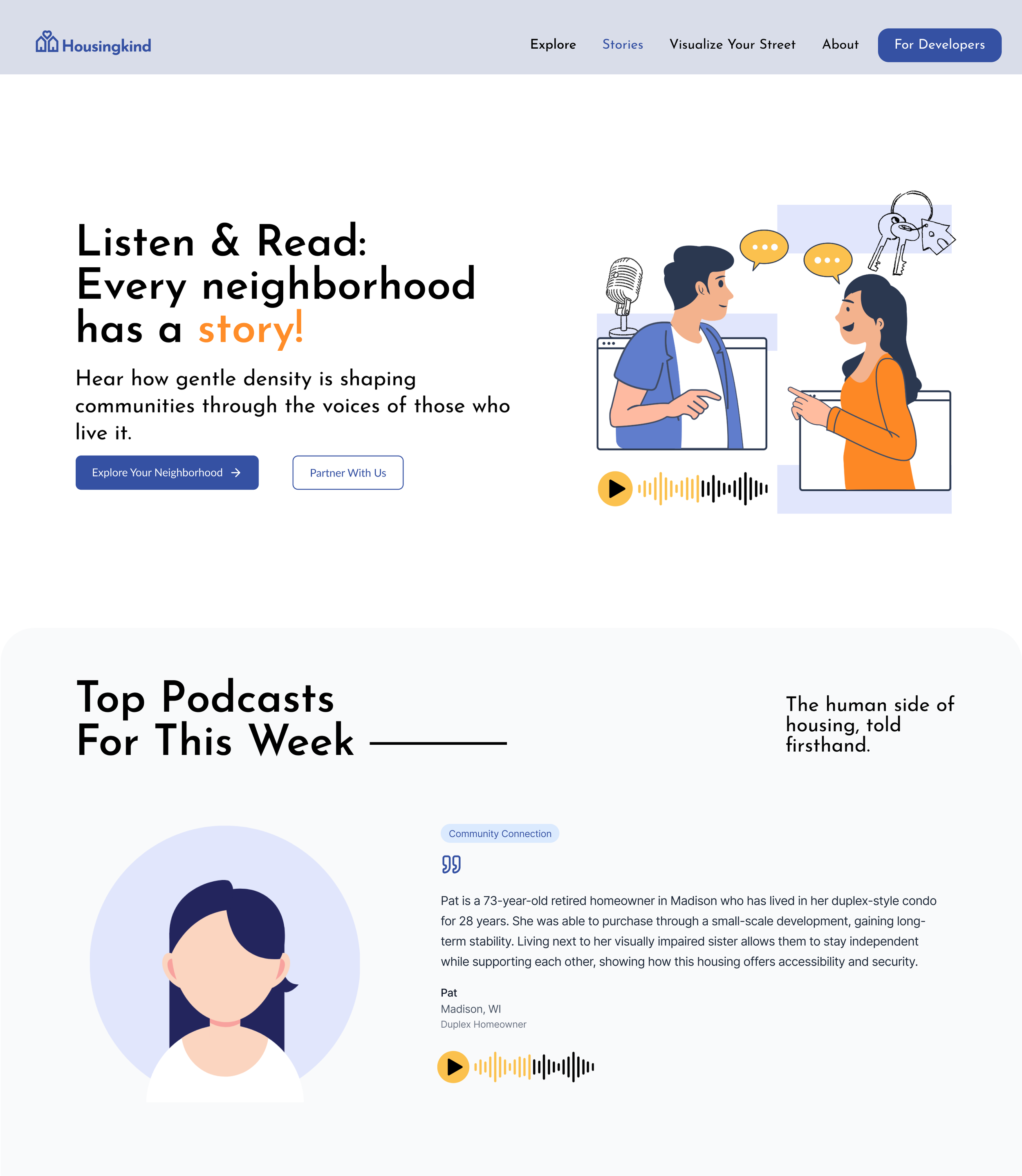
After (Final Design(
Refined and redesigned based on research insights and user needs.
Solution: Housingkind
Housingkind is a digital platform designed to help communities better understand and engage with new housing development. Using UX-driven design, it transforms complex housing concepts into clear, interactive, and user-friendly experiences.
Through immersive visuals and scenario exploration, users can see how missing middle and mixed-use housing fit into real neighborhoods, helping reduce confusion, build trust, and support more informed conversations.
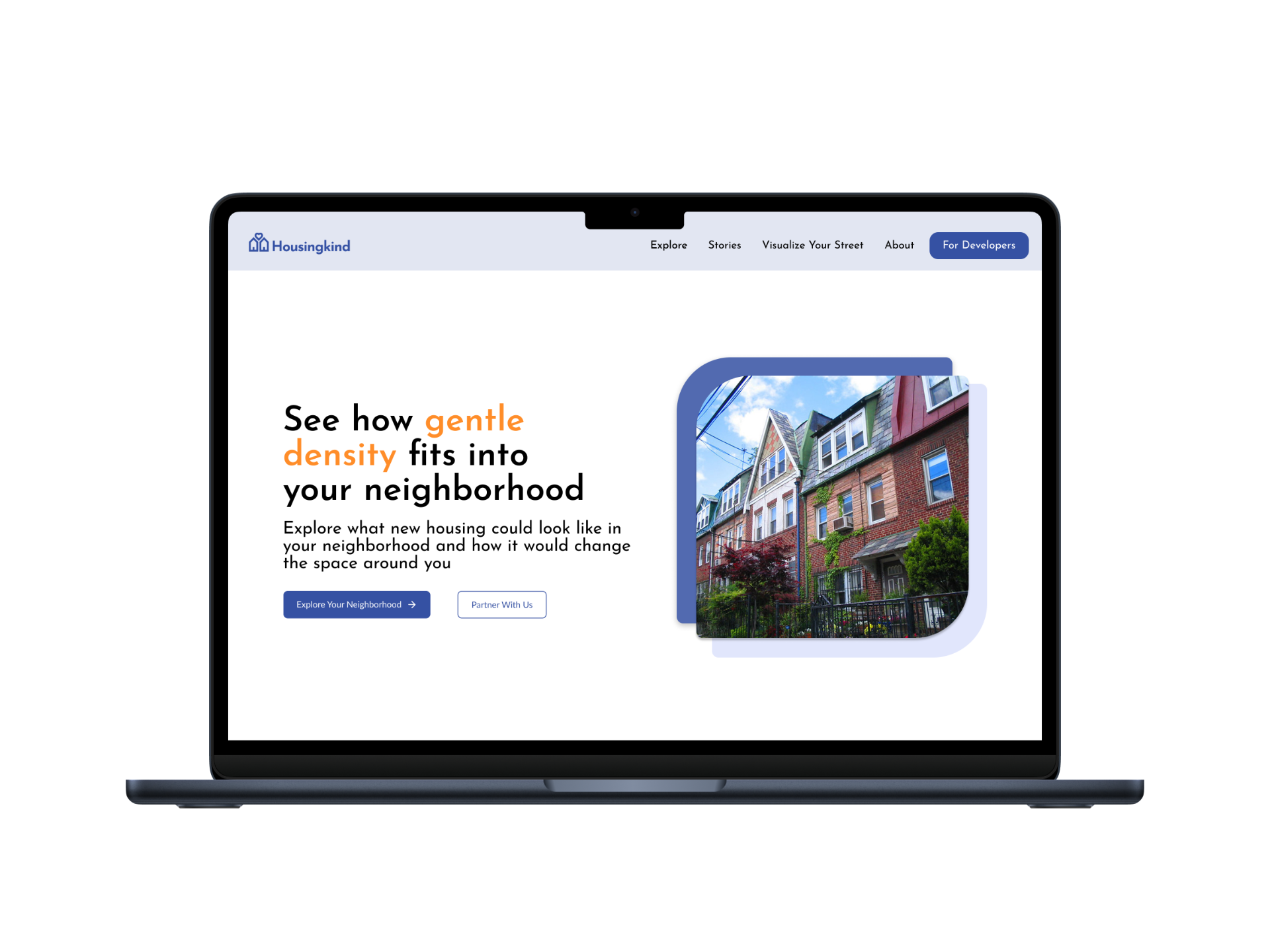
Decision Making & Thought Process
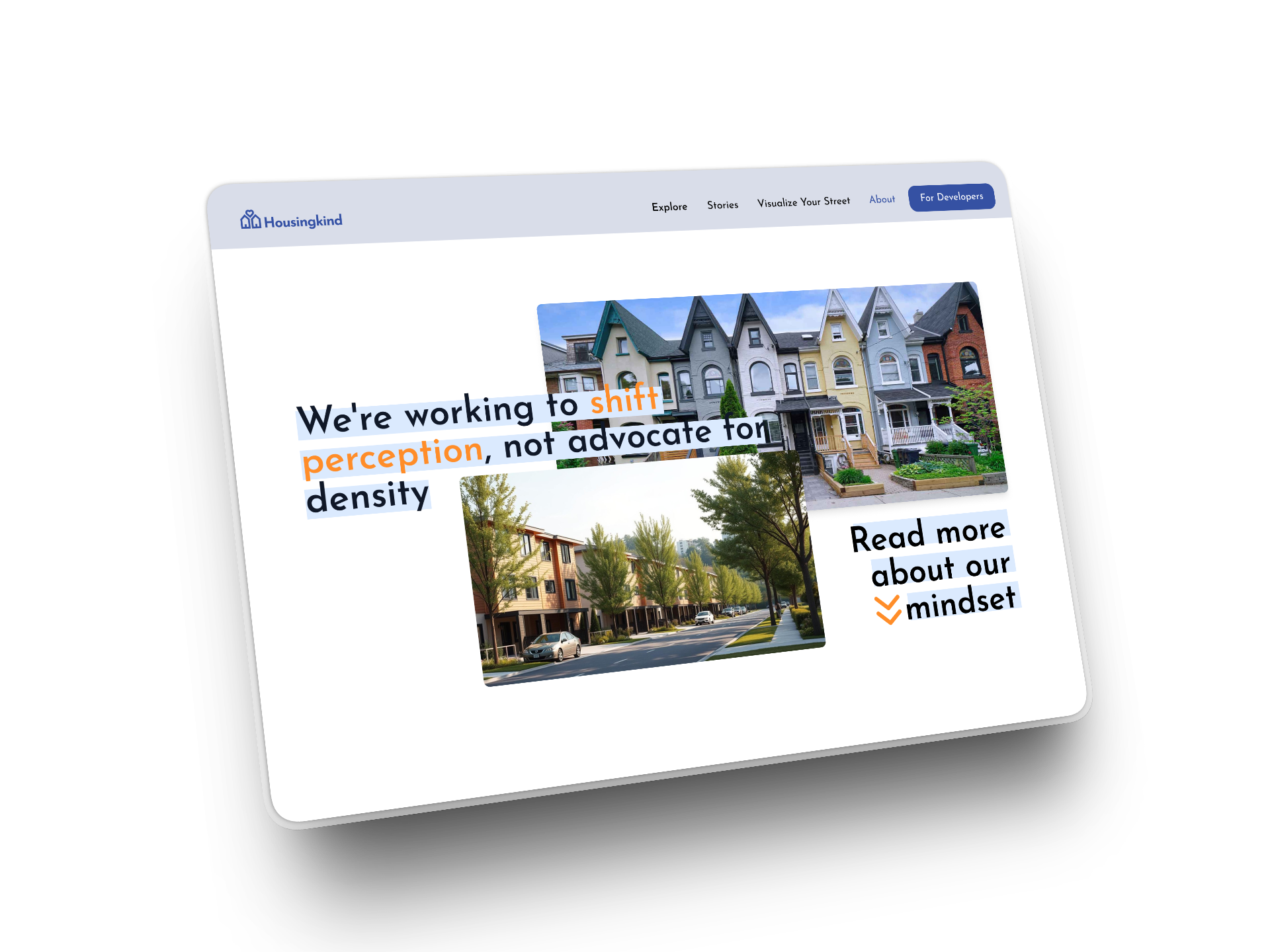
When taking on the design lead role for Housingkind, my main goal was to keep everything clear, straightforward, and approachable. Since the topic of housing can feel complicated or even intimidating, I wanted the website to feel easy to understand for both residents and developers, no matter their background or familiarity with the topic.
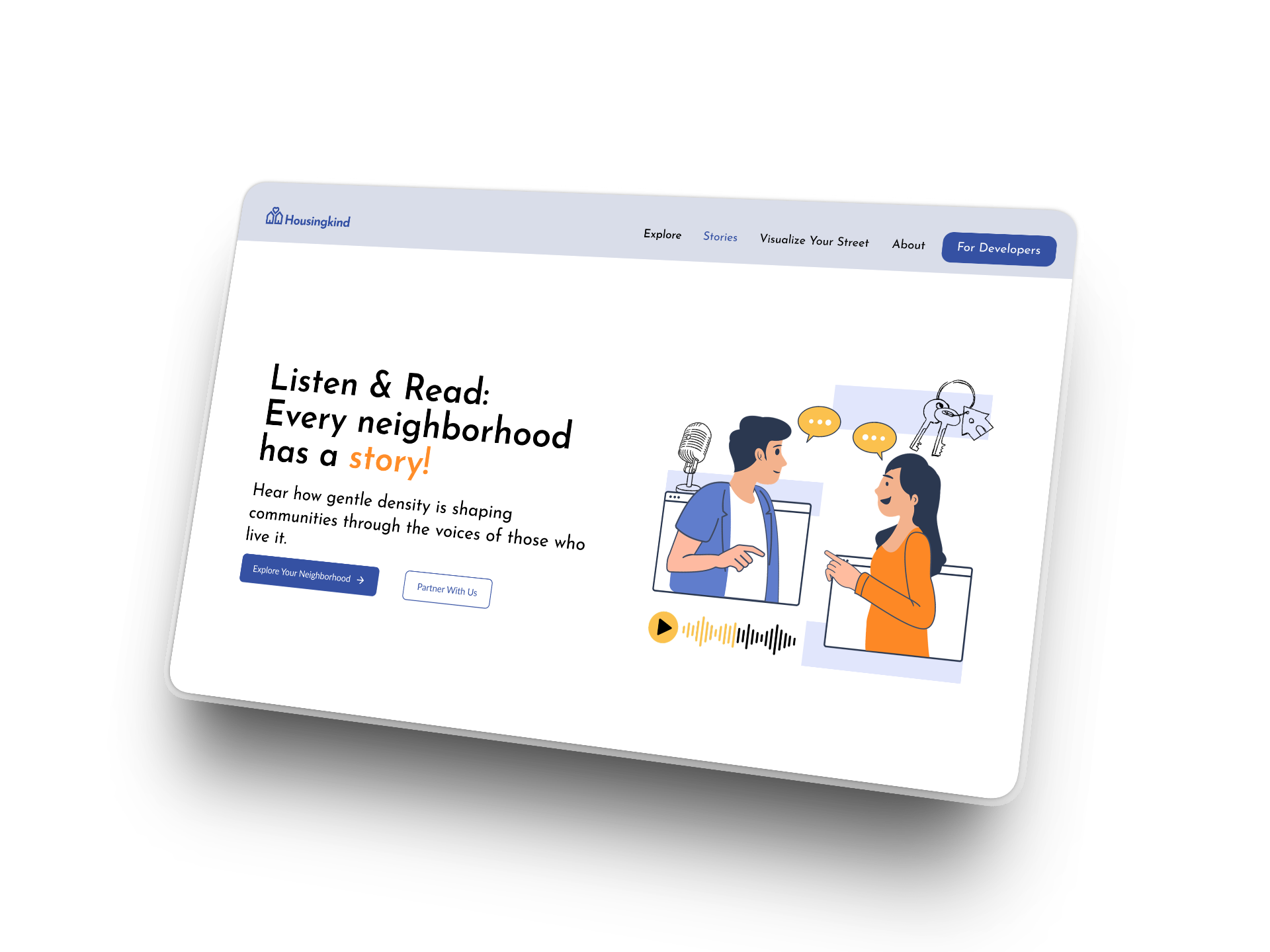
Visually, I made intentional decisions to keep the design friendly and engaging. I introduced a pop of orange in the titles and key phrases to help guide the user’s attention and highlight important ideas. This not only adds some personality to the site, but also helps emphasize what Housingkind is trying to communicate without relying on long blocks of text.
Throughout the process, I kept asking myself:
Is this easy to follow at a glance?
Would someone unfamiliar with housing understand this?
Does this feel welcoming rather than overwhelming?
Overall, my decisions were centered around creating a design that feels accessible, informative, and inviting, helping users better understand gentle density instead of feeling confused or resistant to it.
Feedback and Recognition
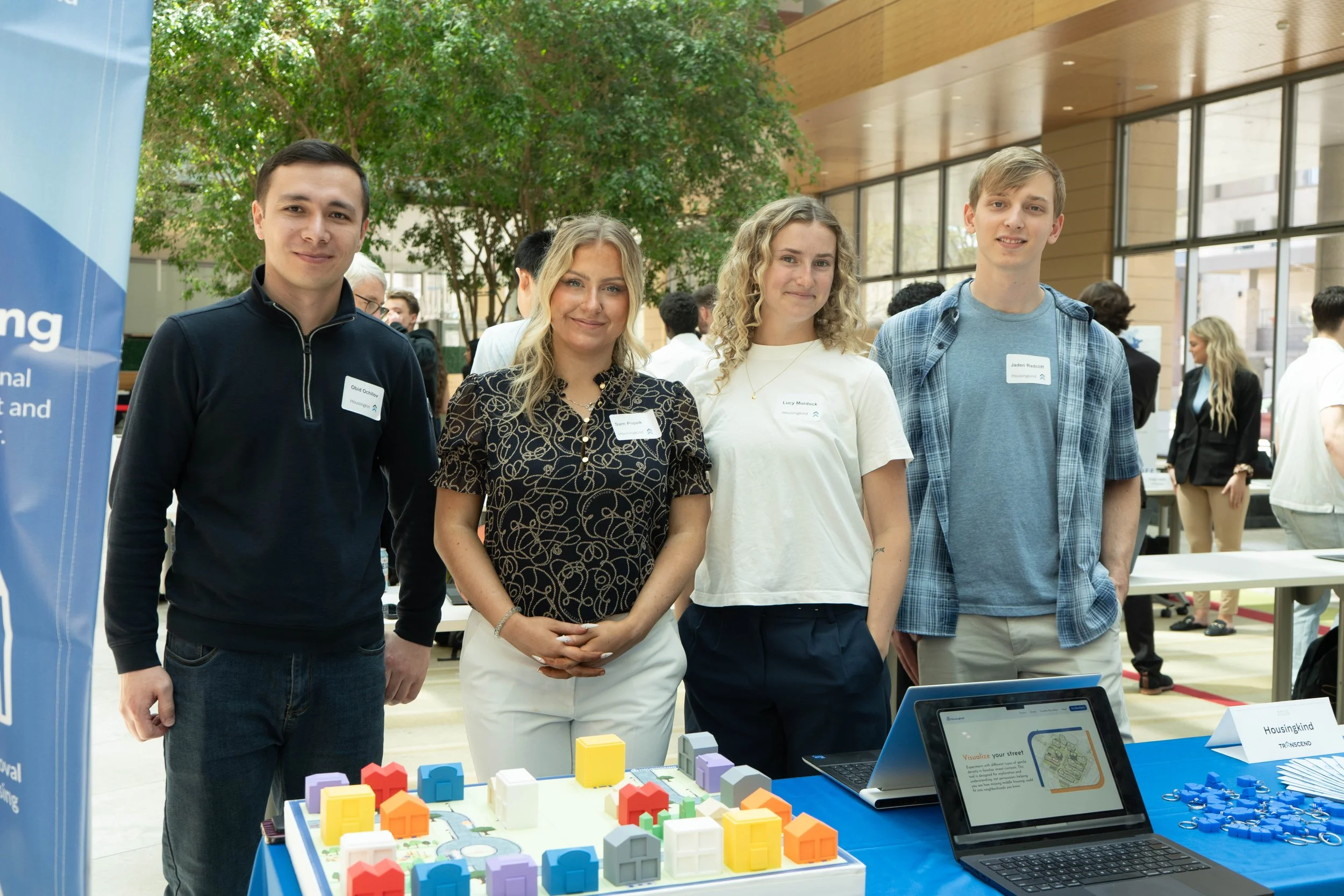
Presenting Housingkind at the Transcend Competition with my teammates.
We presented Housingkind to developers, housing advocates, and city stakeholders across Wisconsin.
Their feedback validated both the problem framing and the approach:
“This could genuinely change how communities respond to new development.” - Madison City Counsel Alder
“You’ve done a great job translating systems thinking into something people can actually engage with.” - Madison Developer
“It feels like a real tool developers and communities could actually use.” - Milwaukee Housing Advocacy Organization Representative
Reflection
As this project is coming to an end and our final prototype is nearing completion, I’ve been reflecting on how much this process has shaped my understanding of design. Working on a complex, real-world issue like the housing crisis pushed me to think beyond just the interface and consider systems, stakeholders, and the impact of design decisions.
I’ve learned the importance of grounding design in research and real conversations, especially when dealing with topics that involve community trust and differing perspectives. This project also challenged me to simplify complex ideas and make them more accessible through visualization and interaction.
Throughout the project, I also explored how AI-powered tools such as Figma Make can support the design process. By leveraging AI for rapid concept generation and iteration, I was able to explore multiple interface directions more efficiently, evaluate ideas quickly, and focus more time on refining solutions based on research and feedback.
Overall, Housingkind has shown me how design can play a role in bridging gaps between people, making difficult topics easier to understand, and creating more informed and meaningful conversations. It reinforced that successful design is not just about creating interfaces—it's about using the right tools, research, and processes to help people better understand complex challenges and make informed decisions.